Skip to the content

IOP A community website from IOP Publishing

Search


Categories

Powered by Movable Type 4.21-en

environmentalresearchweb blog

« Fuelling up | Main | Missing wildlife »

Open water

Ocean sampling takes off in earnest.
With the refuelling complete, Cape Bathurst is the location for today's ocean sampling. Below us the ocean floor forms a cliff, dropping from about 150 m below the surface to a depth of 250 m. It's a region of upwelling, where nutrient-rich water from below comes up to the surface, so it's likely to be relatively rich in life. Heike Link of the University of Rimouski, checks this out by taking blocks of sediment - or "box cores" - from the ocean floor. She finds several different species, including brittlestars, a marine worm from the Sipunculid family a foot long, other smaller worms known as polychaetes and a snail. Later tests will reveal the amount of life inside the sediment by checking how much respiration is taking place.
arcticmon23 042 1000.jpg
Meanwhile, Stephane Thanassekos of Laval University is searching for Arctic cod larvae by casting nets over the side of the boat but it proves to be a bad day for fishing. And Mukesh Gupta of the University of Manitoba shows me the laser kit he's using to measure the roughness of the ocean. Earlier in the season the team used the same equipment, which measures how long it takes four laser beams to travel to the surface and back, to look at the surface of the ice. Surface roughness affects heat transfer between the atmosphere and ice or water below, and it could be altered by climate change. It's the first time this prototype laser wave slope equipment - or LAWAS - for short has been used to measure ice roughness from a ship.

A tour of the Amundsen's engine rooms reveals the six 3000 horse power engines that power the icebreaker, as well as the evaporators for converting seawater into drinking water, the sewage treatment systems, and the heating and lighting generators. The propellers themselves are driven by electricity generated by the diesel engines - this means that if they get stuck in the ice they aren't mechanically connected to any parts in the engine that could break.

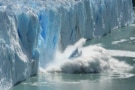
arcticmon23 041 1000.jpgNot that becoming stuck in the ice is a very likely prospect at the moment. This year the ice in the Amundsen Gulf broke up around two to three weeks early. Organisms that live underneath the ice are eaten by seabirds, seals and polar cod, Haakon Hop of the Norwegian Polar Institute tells me. The early melting could affect the whole food chain. So it's crucial to know more about how the system works to predict what could happen as the effects of climate change kick in. "My impression is that the melting process is going really fast this year," said Haakon. "Not much is known about the effect of the melt on ecosystems."

As Haakon explains, the Circumpolar Flaw Lead project is multidisciplinary, bringing both physical scientists and biologists together. Large teams have been working together out on the ice taking cores, measuring light levels, and collecting zooplankton and ice fauna. This combination of biological and physical samples can help scientists put together a better story to explain what's going on.


TrackBack

TrackBack URL for this entry:
http://www.iop.org/mt4/mt-tb.cgi/320

Post a comment

(If you haven't left a comment here before, you may need to be approved by the site owner before your comment will appear. Until then, it won't appear on the entry. Thanks for waiting.)

Your comments