Skip to the content

IOP A community website from IOP Publishing

environmentalresearchweb blog

« AGU: Adapt and thrive | Main | AGU: Cold outlook »

AGU Meeting: Ocean view

It’s fair to say that climate change is an issue that’s in the public eye but the same’s not true for its close relation, ocean acidification. In one of the first pieces of public outreach work for the topic, researcher Elizabeth Kolbert wrote an article for the New Yorker in 2006 entitled “The Darkening Sea”. Retired history teacher Sven Huseby read the piece and was horrified - since then he’s created a documentary, together with Niijii Films, that it’s hoped could be the “Inconvenient Truth” for ocean acidification.

“We considered ourselves fairly well informed in 2006 and we had never heard of ocean acidification before,” said Barbara Ettinger, producer of the film that will be released next year. “We Googled it and there were only three hits.”

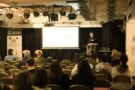
During a presentation at the AGU Fall Meeting, Sven and Barbara showed highlights from the 84 minute long piece “A Sea Change”. The film sees him visit some of the oceanside locations he’s lived in, from Norway to Alaska to Seattle, and speaks to researchers about ocean acidification. Scientists Richard Feely, Chris Sabine of NOAA and Ed Miles of the University of Washington, who were interviewed during the film, participated in a panel session afterwards, as did a member of the audience that it turns out Sven taught history to. He’s now working at a science museum so it looks like Sven’s history teaching was pretty good.
 
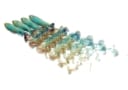
The shelled marine organisms pterapods play a key role in the film. Placing the creatures’ shells in water as acidic as the oceans could be by the end of the century causes them to dissolve within 48 hours. As they sit at the bottom of the food chain, this has implications not just for the health of pterapods but the whole of the ocean ecosystem. “My ultimate fantasy is that Disney makes an animated film Pterry the Pterapod,” said Huseby.

The team was careful to avoid presenting too much scientific data during the documentary. “We’re targeting the film at people who don’t like graphs and who left An Inconvenient Truth saying it was a film about graphs,” said Huseby. “There is a broad audience out there who still haven’t recovered from taking chemistry or physics at high school. This isn’t targeted at a green audience or naysayers but at a large audience that doesn’t find itself engaged day to day with science.”

Niijii Films is looking to form partnerships to disseminate information on ocean acidification - if you’d like to find out more, you can get in touch at http://www.aseachange.net.

The last word goes to Jeff Short of NOAA, who says during the film, “when I grew up it was nuclear war we were worried about. This is, I think, a worse problem…you can’t talk nature out of this.”

TrackBack

TrackBack URL for this entry:
http://www.iop.org/mt4/mt-tb.cgi/2545